

Why Do My Eyes Need to be Dilated?
Why Do My Eyes Need to be Dilated?
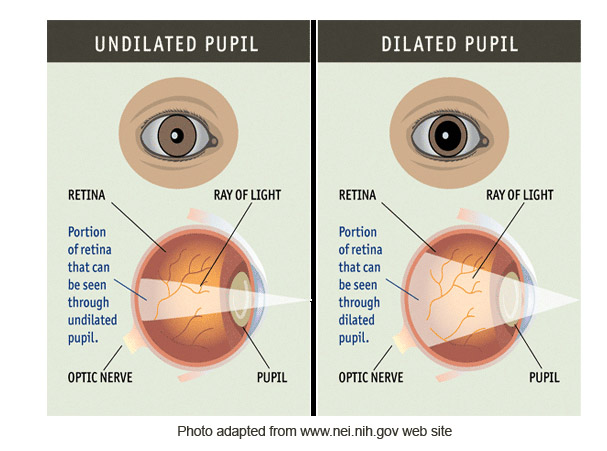
This is a common question that we hear from patients. A simple explanation will explain the importance and reason this process is performed as part of a comprehensive eye health exam. The inside of eye is lined with a delicate tissue called the retina. The retina is a crucial component of the eye which allows light to be interpreted for central and peripheral vision. In order to evaluate the retinal health, we have to look through the pupil, which is the dark spot or opening in the center of the eye. Pupil sizes vary depending on a variety of factors. For example, two of the most common factors affecting pupil size are age (as age increases, pupil size decreases) and medications.
When light is shined in the eye, the iris, or colored part of the eye constricts, which decreases the pupil size. If one thinks of the pupil as the aperture of a camera, then the smaller the pupil (or aperture) the more limited the hole your eye doctor can look through. This translates to a smaller amount of retina we can evaluate. Typically, we can evaluate about 40% of this tissue without dilation, depending on the natural pupil size of that individual. Dilation is necessary to assess the peripheral retina for tears, thinning, holes, or other lesions that could potentially lead to vision loss.
Once performed and the retina is determined to be healthy, dilation may not need to be repeated every year. However, certain symptoms may develop which necessitate dilating the eyes in an urgent manner such as flashes of light, new floaters, or peripheral vision loss. Diabetics should be dilated every year.
Different strength dilation medications and side effects are dependent on the size of the pupil and color of iris. The side effects of dilation are: reduced focusing ability at near, and light sensitivity that typically lasts about 3-4 hours.
Our goal as your eye care provider is to ensure healthy eyes, lifelong. Performing dilation allows for completion of your comprehensive exam at the time of your annual visit. Indications and contraindications for dilation are determined on an individual patient basis.

 A friend recently asked me what the most common question that I get from patients is. The first query that popped into my mind is “If I start wearing glasses, will they make my eyes worse (or will they make my eyes better?)” I felt like this was a helpful topic for Envision’s new blog as it comes up so often.